Summary: The best endocrinology clinics in Texas include The Endocrine Center for multi-location care in Houston, Endocrinology Clinics of Texas for personalized one-on-one attention, Houston Endocrinology Center for diabetes education support, Endocrine & Diabetes Plus for broad metabolic and hormone care, and Memorial Endocrinology & Diabetes for established multi-provider care in West Houston. The right pick depends on the condition that needs follow-up, how easy visits are to get, and how each clinic handles care between appointments.
A lab portal drops an A1C result, then the primary care office says the next step is an endocrinology referral. The hard part is not finding a specialist in Texas. It is choosing a clinic that fits a follow-up relationship before the first appointment is even on the calendar.
Endocrinology care rarely ends after one visit. Diabetes medication changes, thyroid dose checks, CGM questions, weight-related hormone treatment, and pituitary or adrenal workups all call for a clinic that can handle repeated contact without losing track.
The right shortlist starts with condition fit, visit access, and review quality before star rating alone. A high score in our directory is beneficial when the clinic's specialty and follow-up model align with the patient's specific needs.
1. The Endocrine Center: best for multi-location adult and teen care
The Endocrine Center is a Houston endocrinology, diabetes, and thyroid practice for adults and teenagers, with board-certified specialists at its Main Campus, Methodist West, and Greater Heights office locations. The clinic fits patients who want one practice group that can cover endocrine care across several Houston locations instead of tying every visit to a single office.
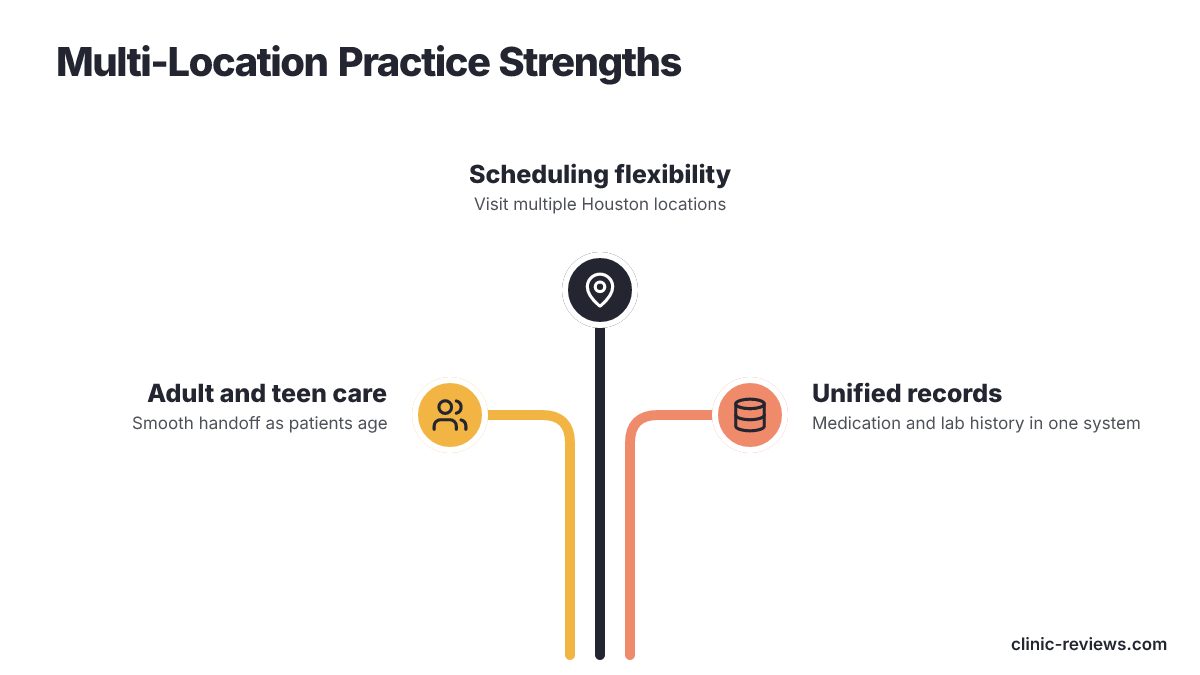
The strongest match is a patient who expects ongoing diabetes or thyroid management and needs scheduling flexibility inside one city. A teenager moving toward adult endocrine care may also find the adult-and-teen scope useful, because that handoff can get complicated when pediatric records, medication history, and lab trends sit in separate systems.
There is a trade-off. A multi-location practice still asks patients to check where each provider sees patients, which lab or imaging records are needed before the first visit, and whether follow-ups can stay with the same clinician. A larger footprint helps only when the patient experience stays consistent across offices.
2. Endocrinology Clinics of Texas: best for one-on-one physician attention
Endocrinology Clinics of Texas is a Houston clinic where Dr. Shikha Bharatiya provides direct, one-on-one endocrinology care with an evidence-based and personal-attention model. The clinic suits patients who prefer a named physician relationship over a broader multi-provider structure. The best fit is a patient who wants to explain a complicated history once and keep follow-up decisions close to the same doctor. Thyroid medication changes, diabetes medication tolerance, and hormone symptoms often need careful listening across several visits, so continuity matters when the main complaint does not clear up quickly.
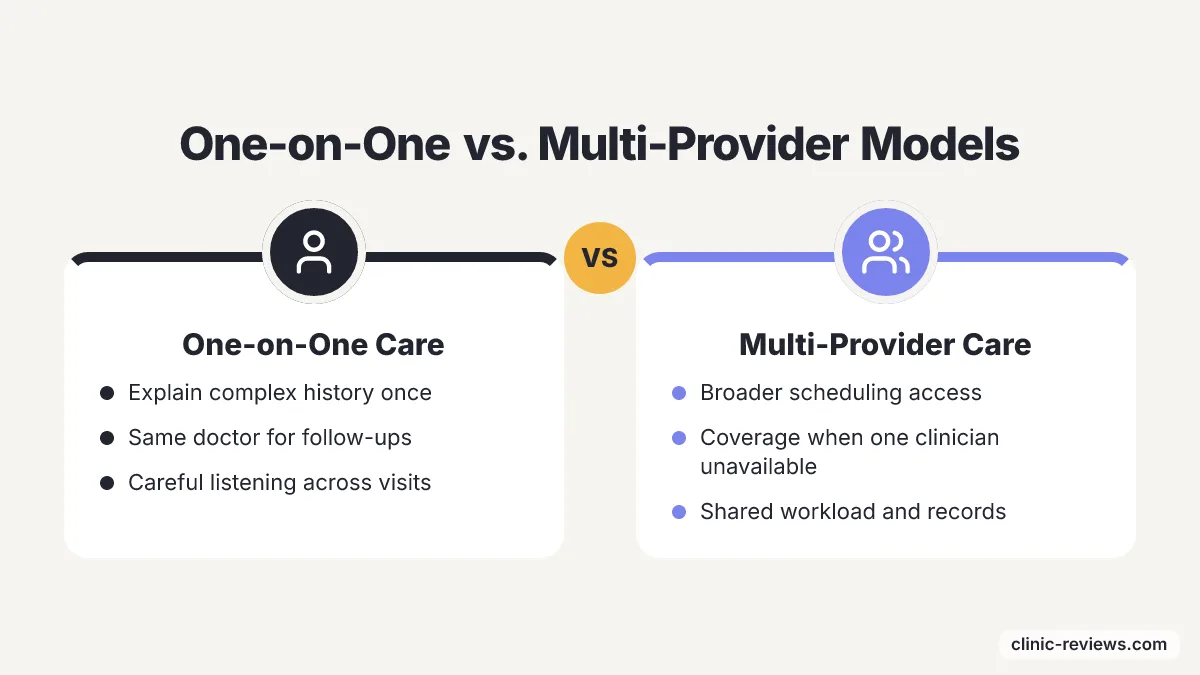
The main trade-off is access. A one-on-one model can feel more personal, but patients should ask how messages, refills, and urgent lab questions are handled when the physician is seeing other patients. Direct care works best when the communication process is clear before the first prescription change.
3. Houston Endocrinology Center: best for diabetes education support
Houston Endocrinology Center is recognized by the American Diabetes Association for Diabetes and Self-Management Education, with its main location on Dotson Road in Houston. The clinic is a strong candidate for patients who need diabetes care that includes structured education rather than medication management alone. Diabetes education becomes more useful when a patient is starting insulin, learning CGM data, changing diet patterns, or trying to understand why glucose readings vary across work, sleep, and meals. A clinic with ADA-recognized education is set up to discuss self-management skills along with physician-directed treatment.
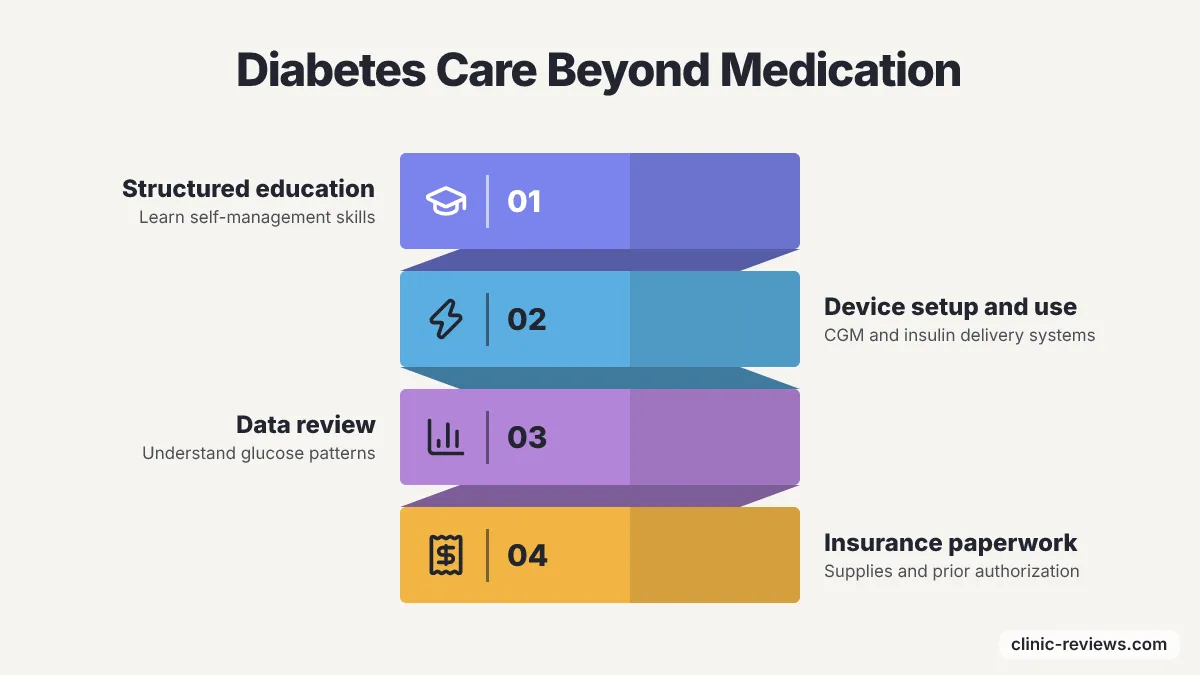
The December 2025 American Diabetes Association release of the Standards of Care in Diabetes 2026 expanded recommendations for continuous glucose monitoring and automated insulin delivery, including preferred automated insulin delivery for people with type 1 diabetes and insulin-using children and adults with type 2 diabetes. Patients comparing Texas endocrinology clinics should ask how each clinic teaches device setup, data review, and insurance paperwork, because modern diabetes care now reaches far beyond a prescription pad.
4. Endocrine & Diabetes Plus: best for broad metabolic and hormone care
Endocrine & Diabetes Plus has board-certified endocrinologists in Sugar Land and Memorial City. The group covers diabetes, thyroid problems, obesity, and other hormone conditions. That makes it a sensible fit for patients whose endocrine issue cuts across categories, such as weight shifts with thyroid symptoms or diabetes care alongside obesity treatment. The clinic's listed focus areas make it worth a look when a patient does not yet know whether the main issue is blood sugar, thyroid disease, weight-related hormone changes, or another endocrine problem.
A wider endocrine scope can lower the chance of starting with a clinic that handles only part of the issue and sends the rest elsewhere.
The trade-off is simple enough. Broad specialty care still needs a sharp first visit. Patients should bring recent labs, medication lists, glucose data if they have it, and a short symptom timeline, because a clinic that covers several endocrine areas can move faster when the referral question is plain from the start.
5. Memorial Endocrinology & Diabetes: best for established West Houston care
Memorial Endocrinology & Diabetes is a multi-provider clinic in the Memorial area of West Houston. It has provided diabetes care and treatment for endocrine and hormonal diseases for more than 35 years. The clinic fits patients who want an established practice with more than one provider involved in endocrine care. A multi-provider setting can help when a patient needs ongoing diabetes care, medication monitoring, or endocrine follow-up that should not stop because one clinician is booked out.
The clinic's long operating history matters for patients who value continuity, especially when endocrine records build over years of labs, dose changes, and imaging results.
The main issue is coordination. Patients should ask whether follow-up visits stay with the original provider, how test results are routed, and whether another clinician can step in when the primary provider is unavailable. A multi-provider practice works best when shared records and patient instructions keep mixed messages from creeping in.
Texas endocrinology clinics compared at a glance
The five clinics differ mainly in care model, location and the patient they suit best:
| Clinic | Location | Care model | Best fit |
|---|---|---|---|
| The Endocrine Center | Houston (Main Campus, Methodist West, Greater Heights) | Multi-location practice for adults and teens | Ongoing diabetes or thyroid care with scheduling flexibility |
| Endocrinology Clinics of Texas | Houston | One-on-one care with Dr. Shikha Bharatiya | Complex histories that need the same doctor at every visit |
| Houston Endocrinology Center | Dotson Road, Houston | ADA-recognized diabetes self-management education | Starting insulin, learning CGM data, building self-management skills |
| Endocrine & Diabetes Plus | Sugar Land and Memorial City | Board-certified endocrinologists across diabetes, thyroid, obesity and hormones | Symptoms that cross several endocrine categories |
| Memorial Endocrinology & Diabetes | Memorial area, West Houston | Established multi-provider clinic | Long-term follow-up that should not stall when one clinician is booked |
How should you choose an endocrinology clinic in Texas?
Start with the condition that needs follow-up, then compare access, education and review patterns. Texas has enough endocrinology choice that a patient can be selective: our directory lists 1,256 endocrinology clinics across 400 cities as of November 2026, which means the first available appointment is not always the best long-term fit.
A diabetes patient should ask different questions than a thyroid patient. Diabetes care often needs device teaching, medication adjustment, nutrition discussion and insurance paperwork for supplies, while thyroid care often turns on lab timing, dose changes, ultrasound follow-up or biopsy referrals. A clinic that is excellent for diabetes education is not automatically the best match for a thyroid nodule workup, and a thyroid-focused visit may not need the same education resources as insulin management.
A practical first-call checklist should cover the parts of care that fail most often after booking:
- Ask whether the clinic treats the exact condition named in the referral, such as diabetes, thyroid disease, obesity, pituitary disease, adrenal disease or hormonal symptoms.
- Ask whether the first visit can be in person and whether later visits can be virtual for lab review or medication follow-up.
- Ask which records are required before scheduling, including recent labs, imaging, glucose logs, CGM reports and current medications.
- Ask who answers portal messages about abnormal results, refills and side effects between visits.
- Ask whether the clinic accepts the patient's insurance and whether diabetes devices or injectable medications require separate prior authorization steps.
Telehealth deserves a direct question rather than an assumption. CMS finalized the 2026 Medicare Physician Fee Schedule rule, effective January 2026, and services listed or added on the Medicare Telehealth Services List are treated as permanent, which gives Medicare patients more predictable access to telehealth follow-ups when a clinic offers them. Texas patients should still confirm whether a clinic uses telehealth for new visits, follow-ups only, diabetes education or medication checks.
Texas telehealth visits also need clear consent when nursing staff are involved. In April 2026, the Texas Board of Nursing adopted amendments to Rule §217.24 on telehealth informed-consent documentation, including audio-only visits, so patients should expect clinics using nurse practitioners in telehealth to explain who is treating them and how consent is recorded. A patient who cannot get a clear answer about telehealth consent should ask again before sharing medical details over a virtual visit.
Review scores should be read for patterns, not just rank. A clinic with a high rating and only a handful of reviews gives less patient-experience evidence than a clinic with many reviews that consistently mention appointment access, portal response or diabetes education. Clinic ratings matter most when the written comments describe the exact friction the patient is trying to avoid.
Clinic Reviews is a search platform that lets people browse verified patient reviews and ratings for U.S. clinics by city and medical specialty. The useful move is to compare rating count, recurring praise and recurring complaints before calling, because endocrinology patients need a clinic that handles repeated follow-up rather than a single transaction.
Specialty fit should override brand familiarity from another area of care. Guardian Family Dental has a 4.9/5 rating from 582 reviews in dental care, but an endocrinology search should stay inside endocrine clinics and condition-specific reviews rather than borrowing confidence from an unrelated specialty.
Pregnancy changes the selection process because endocrine care can overlap with maternal-fetal risk. A patient comparing thyroid disease, diabetes or hormone conditions during pregnancy may need an endocrinologist and an OB/GYN or MFM team working from the same lab targets, and the Clinic Directory guide to high-risk pregnancy clinics in Texas is a better next comparison when pregnancy risk is part of the decision.
A child with growth, puberty or pediatric diabetes concerns needs a narrower screen than this adult-leaning shortlist provides. Parents should ask directly whether a listed clinic sees pediatric endocrinology for the child's exact condition, because a clinic that treats adults, teenagers or general endocrine disease is not the same as a pediatric endocrinology program.
The best first appointment is the one that turns a referral into a plan the patient can actually follow. A patient should leave knowing which labs come next, when results will be reviewed, what symptoms require a call, and who handles refills or device questions before the next visit.
Which Texas endocrinology clinic should you call first?
Call the clinic that most closely matches the condition first, not the one with the highest star rating alone. A good first call takes recent labs, medication names, insurance details and one clear sentence about the referral problem.
Patients comparing Texas endocrinology clinics should ask about provider continuity, diabetes education, telehealth rules and between-visit messaging before giving up a calendar slot. The advice stops once symptoms are urgent, severe or rapidly changing, because chest pain, confusion, severe dehydration, fainting or dangerously abnormal glucose readings belong with emergency medical care rather than a clinic comparison. For routine endocrine follow-up, the next action is simple: choose two clinics from the shortlist, call both with the same questions, and book the one that gives the clearest path from first visit to follow-up.
When to seek urgent care instead of comparing clinics
A clinic comparison is for routine endocrine follow-up only. Chest pain, confusion, severe dehydration, fainting or dangerously abnormal glucose readings need emergency medical care right away, not a scheduled endocrinology visit.
Frequently Asked Questions
What are the best endocrinology clinics in Texas for multi-location care?
The Endocrine Center in Houston is ideal for patients seeking multi-location care. It offers services at its Main Campus, Methodist West, and Greater Heights locations, making it suitable for those who need flexibility and ongoing management for diabetes or thyroid conditions.
Which endocrinology clinic in Texas offers personalized one-on-one physician attention?
Endocrinology Clinics of Texas in Houston provides direct, one-on-one care with Dr. Shikha Bharatiya. This clinic is best for patients who prefer a continuous relationship with a single physician, especially when managing complex histories or conditions that require careful listening and follow-up.
Where can I find a clinic in Texas that supports diabetes education?
Houston Endocrinology Center is recognized by the American Diabetes Association for its Diabetes and Self-Management Education. It is a strong choice for patients who need comprehensive diabetes care, including education on insulin use, CGM data, and self-management skills.
Which clinic in Texas is best for broad metabolic and hormone care?
Endocrine & Diabetes Plus, with locations in Sugar Land and Memorial City, is well-suited for patients with complex endocrine issues that span multiple categories, such as diabetes, thyroid problems, and obesity. Its broad focus helps address various endocrine conditions in one place.
What should I consider when choosing an endocrinology clinic in Texas?
When selecting a clinic, consider the specific condition needing follow-up, access to care, and the clinic's education and review patterns. It's important to ensure the clinic treats the condition named in the referral and to inquire about telehealth options, insurance acceptance, and the handling of lab results and medication follow-ups.
Do Texas endocrinology clinics offer telehealth visits?
Some do, but patients should ask each clinic directly whether telehealth covers new visits, follow-ups only, diabetes education or medication checks. Medicare patients have more predictable access to telehealth follow-ups under the 2026 Medicare Physician Fee Schedule rule, and Texas clinics using nurse practitioners in telehealth should explain how informed consent is recorded.
Do these clinics treat children with endocrine conditions?
This shortlist leans toward adult care, so parents should confirm pediatric endocrinology directly. The Endocrine Center treats teenagers as well as adults, but a clinic that sees adults, teens or general endocrine disease is not the same as a dedicated pediatric endocrinology program for growth, puberty or pediatric diabetes concerns.